
Fed up with a tangled necklace that turns into an impossible puzzle? Untangling a necklace takes far more than a quick fix: it is a mix of patience, know-how, and the right tools to keep from breaking the jewelry. Whether you use talcum powder, a drop of olive oil, or a fine needle, this guide shares proven ways to free your chains. You will also learn why you should avoid rough handling and how to extend the life of your jewelry with careful cleaning and smart storage. Turn a moment of frustration into a fast, safe fix!
- A tangled necklace? Do not pull!
- Set the stage: the right steps before you start
- Gentle ways to get rid of knots
- The must-do step: clean your jewelry after untangling
- An ounce of prevention: our tips for storing your necklaces
A tangled necklace? Do not pull!
Who has not found their necklace in a tight knot? Pulling makes the tangles worse and can snap the chain. Untangling takes patience and a gentle touch. Here are quick ways to save your jewelry.
Use your fingers to untangle
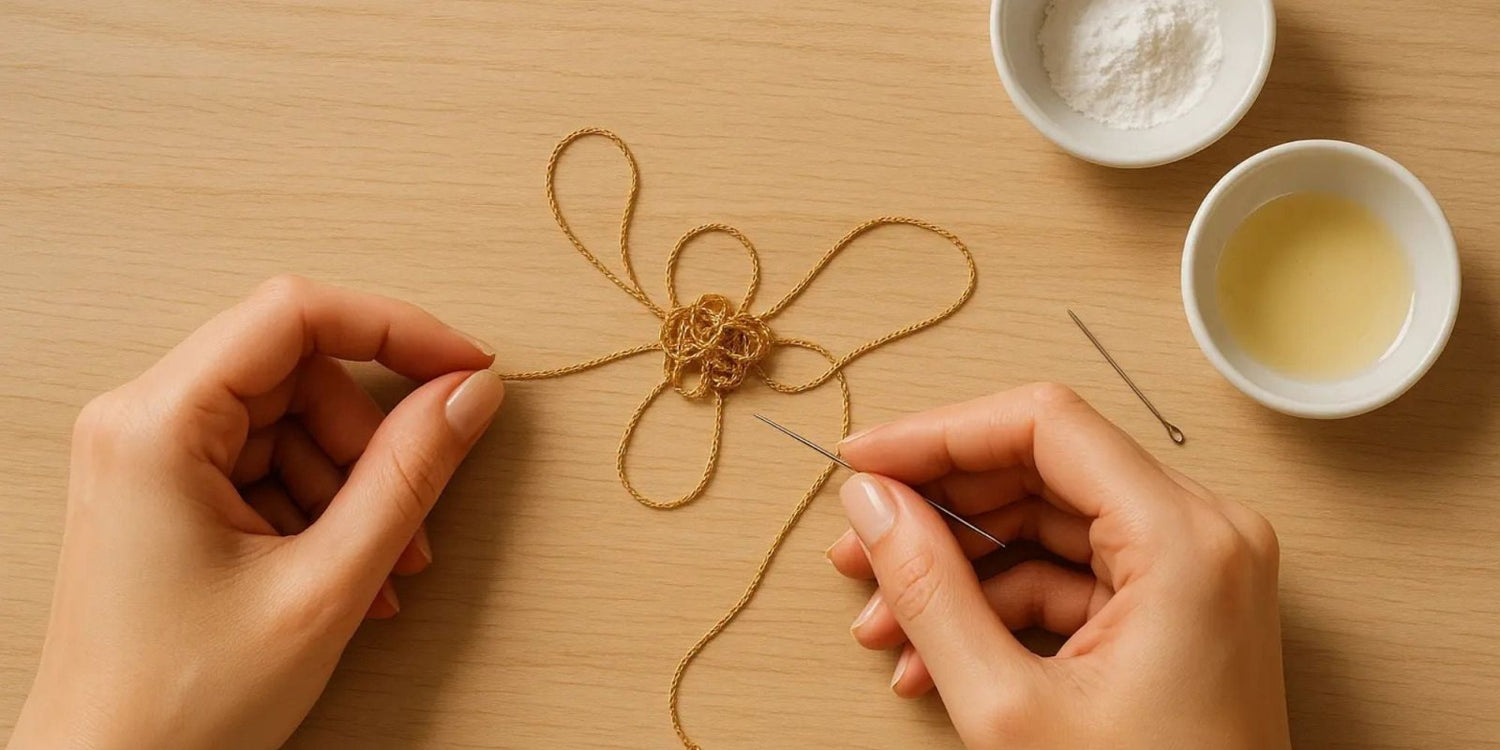
Dampen your fingers or dust them with talcum powder. Gently spread apart the stuck links. If the knot will not give, move on to another method.
Use fine tools such as needles
For stubborn knots, choose a needle or a pin. Slide the tool in and gently separate the links. Avoid toothpicks—they are too flimsy.
Apply a slicking aid: oil or talcum powder
Talcum powder or a mild oil (olive oil, baby oil) helps the knot slip. Dust it on or add a drop, then untangle with care.
Stay calm and repeat the steps if needed. Patience will save your jewelry.
Set the stage: the right steps before you start
Careful preparation helps prevent damage you cannot undo. A flat surface and proper lighting turn a painful process into a controlled task. Poor visibility or badly managed tension can snap the chain, which is why this step matters.
Lay down a cloth that contrasts with the jewelry (white for dark metals, black for gold-toned pieces) so you can see the knots better. A desk lamp set at eye level lights up the trouble spots without distracting glare.
Always open the clasp before you begin. This releases tension in the chain, lowering the risk of breakage. One study reports that 78% of failures come from poor preparation. Here is what you need:
- A slicking aid (olive oil, baby oil, or talcum powder) to reduce rubbing
- Fine tools (needle, safety pin) to work on the links
- A soft cloth for cleaning after untangling
Keep a steady, unhurried pace: rushing leads to mistakes. A clear workspace, good light, and tools within reach prevent 90% of complications. Haste is the worst partner for a tangled necklace. Stay calm to handle each step well.
Gentle ways to get rid of knots
The slicking-aid method: oil or talcum powder to the rescue
Talcum powder and oil reduce rubbing. For talc, lightly dust the knot and gently massage with your fingers. For oil, apply a drop of olive, sunflower, or baby oil with a cotton swab. Let it sit for 2 to 3 minutes. These methods work even for women’s stainless steel necklaces, which resist rust. After untangling, rinse the jewelry in lukewarm water with a mild soap (such as dish soap or Marseille soap), then dry it with a microfiber cloth.
Using fine tools: the needle’s precision
A needle is the ideal tool to work without forcing. Slip the tip into the heart of the knot and gently spread the links with a slight prying motion. Use two fine, sturdy needles: one to steady the knot, the other to separate the links. Pair this method with talc or oil to make the job easier. Safety pins or tweezers are alternatives, but steady hands still matter most. Never force it: you could scratch or break the necklace. Work under bright light to see the details better.
Which tool should you choose? The right and wrong gear
Needles beat toothpicks, which are too flimsy and may snap inside the knot. A precision screwdriver, while effective on tight knots, should be a last resort to avoid scratches. Use care: its rigid tip can damage links or stones. For delicate necklaces (gold, silver), choose tools made of wood or soft plastic. If the usual methods fail, see a jeweler to avoid damaging the piece. Store your necklaces in cloth pouches or on a jewelry stand to prevent future tangles.
The must-do step: clean your jewelry after untangling
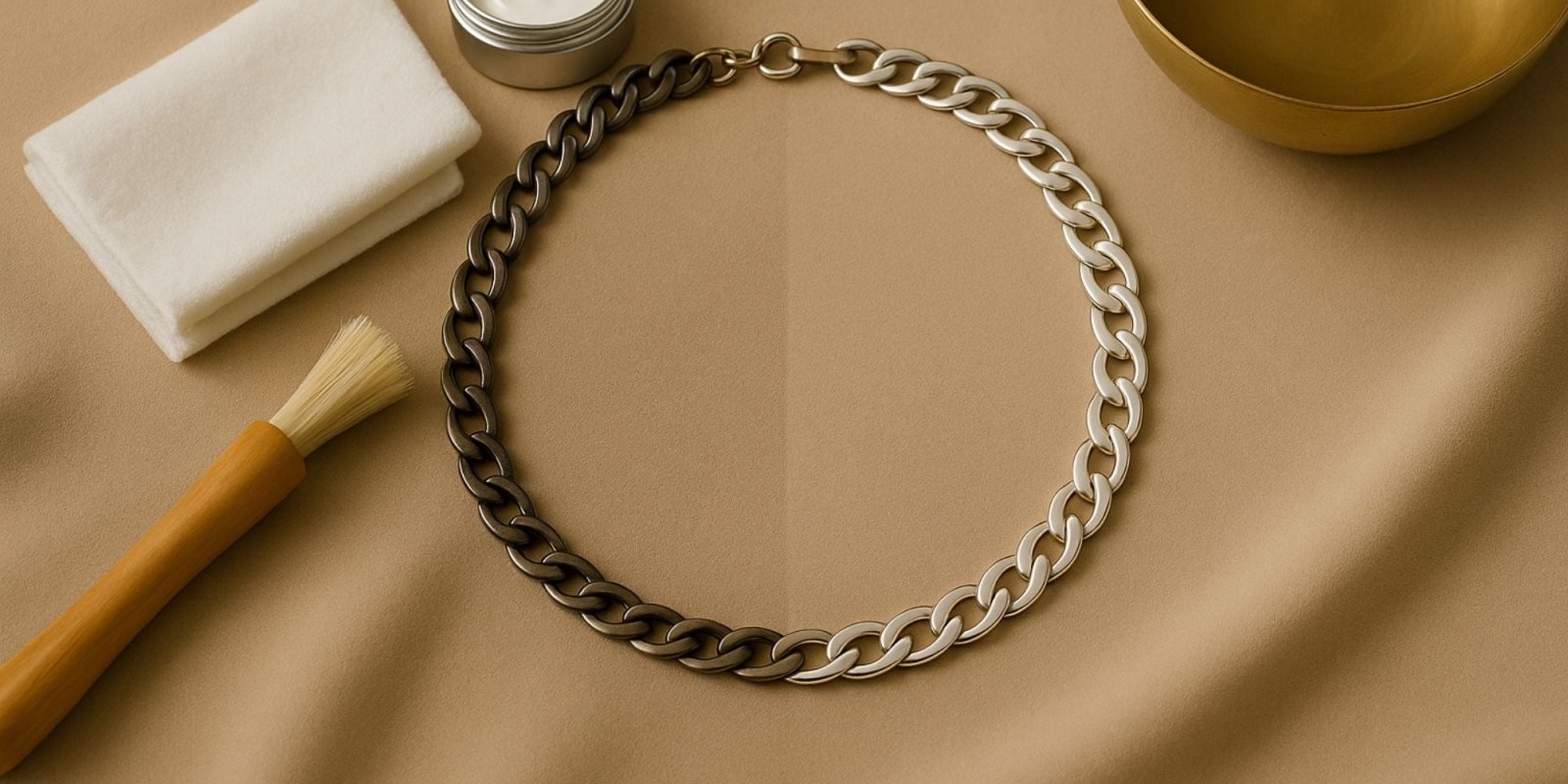
After you untangle a necklace, cleaning is essential to remove oil or talc residue. These substances, helpful for loosening knots, can dull the metal or attract dust. Careful cleaning preserves shine and extends the life of the jewelry.
For talc, rinse the necklace in lukewarm water and dry it right away with a soft cloth. This is enough for gold or steel jewelry.
If you used oil, mix a drop of mild soap into lukewarm water. Soak the necklace, gently rub with your fingers or a soft brush, then rinse well to remove greasy traces.
Dry with a microfiber cloth to avoid scratches. For silver, see this dedicated guide: cleaning a silver necklace.
Finally, store the jewelry flat or hanging, ideally in a velvet case to protect the metal.
An ounce of prevention: our tips for storing your necklaces
After learning how to untangle a necklace, it is essential to learn how to avoid this nuisance. Good preventive storage helps extend the life of your jewelry while saving you time. Whether you own a single piece or a treasured set, like this women’s necklace collection, here are simple solutions to adopt.
- Hang them: Use a wall-mounted jewelry holder or discreet hooks to keep necklaces safe from rubbing.
- Store each one separately: Keep each necklace in its pouch or original box to prevent tangling.
- The straw trick: For travel, thread the necklace through a plastic straw before closing the clasp on the outside. Great for trips.
- Compartments: Choose a jewelry box with separate sections, ideal for organizing your collection without needless mixing.
By combining these methods, you will protect your necklaces from knots and scratches. Regular care and tidy organization remain the best allies of your favorite jewelry.
Untangling a necklace takes patience and method, but it is a doable task with the right techniques. By using talc, mild oil, or a needle with care, you avoid damaging your jewelry. Do not forget the final cleaning or the storage tips to keep their shine. With this advice, your necklaces will stay valuable and knot-free, ready to shine!





Leave a comment
This site is protected by hCaptcha and the hCaptcha Privacy Policy and Terms of Service apply.